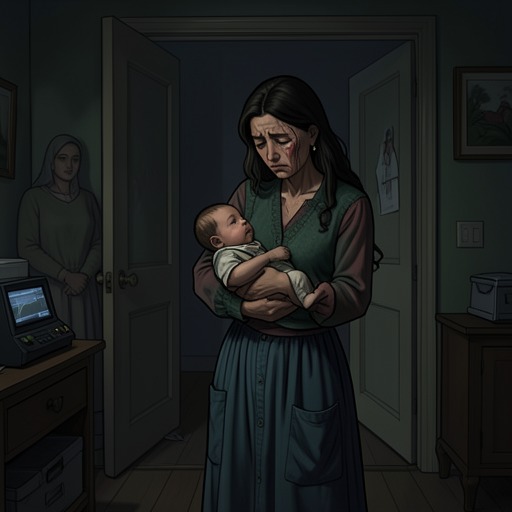
Jiyoung explores a part-time job and a return to reporting
Kim Ji-young, Born 1982Kim Jiyoung’s attempt to return to paid work is shaped less by a lack of ambition than by the conditions attached to motherhood. A weekday ice-cream-shop job briefly offers a possible way to earn money while Jung Jiwon is in daycare; reporting, the work Jiyoung had long wanted to pursue, stirs a more personal excitement. Neither possibility is straightforward. The episode traces how domestic responsibilities, employment insecurity, and inaccessible training make the question of a job inseparable from the question of who will care for a child.
Work Before the Search
Before she left her marketing job, Jiyoung had found work she enjoyed and colleagues she liked. Her first official assignment was a press release based on an assessment of pollution in home bedding. Wanting to do well, she spent several nights preparing a two-page report, revised it after feedback from her team leader, and saw it published with little further change. Newspapers, a magazine for housewives, and a news network picked it up. The assignment established that she could learn the work and produce material that reached an audience.
The workplace was not uniformly welcoming. Clients were often older men in senior positions, and their jokes and expectations made interactions uncomfortable. Jiyoung had to navigate remarks she could not easily answer: smiling risked being taken as encouragement, while not smiling prompted questions about whether something was wrong. The contrast matters to her later search. She is not weighing a return to a career she disliked; she has already experienced both the satisfaction of doing capable work and the gendered social demands that accompanied it.
Care, Time, and Household Pressure
Jiyoung’s concerns about combining work and childcare began before Jung Jiwon was born. She questioned whether she could maintain her career, and worried that their late hours and weekend work would leave the child dependent on daycare or a babysitter. She also challenged Jung Daehyun to consider what he would give up. For her, the stakes included her youth, health, job, colleagues, social networks, career plans, and future. His anticipated losses centered on seeing friends less often, coming home earlier, and helping with chores after work. Their exchange lays out the unequal consequences she fears: the same decision to have a child could disrupt her working life far more than his.
After Jiwon began daycare shortly after turning one, Jiyoung gained about three hours between drop-off and pick-up. Most of that time went to laundry, dishes, tidying, and preparing food and snacks. She seldom had time simply to sit with a cup of coffee. The account sets her experience beside statistics estimating that a stay-at-home mother with a child under two has four hours and ten minutes a day to herself, compared with four hours and twenty-five minutes for a mother whose child attends daycare. Daycare creates only a fifteen-minute difference in those figures; it changes whether a mother does housework with the child beside her, not whether the work disappears.
That distinction also informs Jiyoung’s frustration with the way domestic labor is discussed. A washing machine and vacuum cleaner reduce some physical effort, but do not sort, load, hang, or otherwise complete the work on their own. At different times, housework is dismissed as idleness or praised as work that sustains life, yet its monetary value is rarely calculated. Jiyoung’s mother cannot provide regular help while working longer hours at her porridge shop, whose business has weakened as more restaurants open nearby. The family’s available care is therefore limited, even as Jiyoung is expected to raise her child well.
The Ice-Cream-Shop Opening
Financial pressure gives the search urgency. The couple’s landlord raises the flat’s rent deposit by 60 million won when their lease ends, requiring another loan. They cannot afford to buy a home for a family of three on Daehyun’s income alone, and Jiyoung anticipates further costs for kindergarten and after-school programs. Housing, living expenses, and education all weigh on her decision to earn again.
After dropping Jiwon at daycare, Jiyoung sees a supermarket sign advertising weekday work at an ice-cream shop from 10 a.m. to 4 p.m., for 5,600 won an hour, with housewives welcome. The current worker, also a mother, has held the job for four years while her children were at daycare. She is leaving because her older child is about to start first grade. Her account makes the position seem compatible with school-day care, but also exposes its precarious terms: she describes verbal agreements, no contracts or benefits, and only a small severance payment offered after years of work.
The worker appears willing to recommend Jiyoung and even takes down the sign to give her time to decide. Before Jiyoung leaves, she mentions that she has a college degree too. The disclosure stays with Jiyoung for the rest of the day. The job is not an appealing career destination: Jiyoung does not like ice cream, sees no route from part-time work to a better position, and expects that the pay would remain at the minimum. Yet an income of 700,000 won a month would matter to an average-income household, and the hours could allow her to avoid hiring a sitter. The offer is therefore neither an easy opportunity nor an easy rejection; its immediate usefulness sits beside the narrow future it provides.
Reporting and the Limits of Choice
When Jiyoung asks Daehyun what he thinks, he asks whether the job is what she wants. She says it is not. He recognizes the imbalance in urging her toward work she does not want while he continues in work he does want, after she left a job she had enjoyed. His response does not remove the practical pressure, but it gives Jiyoung room to distinguish the need for income from the question of which work she might choose.
For the first time in ten years, she begins weighing her future career again. Her earlier priorities had been her skills and interests; now the central requirement is that she be able to care for Jiwon without employing a babysitter. The possibility she remembers with the greatest interest is reporting. While at the marketing agency, she had hoped to become a news reporter and thought freelance or contributor work might be attainable even if a staff position was not.
She investigates journalism courses, only to find that most meet in the evening for people who work full time. The schedule conflicts with daycare closing times, and even if Daehyun leaves work punctually, she would miss the beginning of class. An evening babysitter would be difficult to find for such a short period, and paying for both childcare and tuition would add to the burden. Daytime courses, meanwhile, are largely hobbies or credentials for teaching children reading, writing, or history. Jiyoung feels that having a baby has narrowed both her career prospects and the subjects she can pursue.
By the time she returns to the ice-cream shop, its position has been filled. She resolves to take the next part-time job that offers the hours and pay she needs, regardless of the type of work. The ending is practical rather than triumphant: her reporting ambition has not vanished, but the immediate search is governed by care schedules and household finances. The episode makes the lost position only one part of the setback. Jiyoung’s available time, the insecurity of the work on offer, and the cost of reaching a more meaningful career all shape what counts as a possible return.